
A well-designed mudroom can make everyday life easier by giving shoes, coats, bags, keys, and other frequently used items a dedicated place. Without enough storage, this transition area can quickly become cluttered, especially in busy households where several people use the same entrance. Custom Mudroom Cabinets offer a practical way to organize these items while making better use of the available wall and floor space.
Unlike standard furniture, custom cabinetry can be designed around the dimensions of the room, the number of users, storage habits, and architectural features. The most effective mudroom is not necessarily the one with the most cabinets. It is the one that places everyday items where they are easy to access while keeping less frequently used belongings organized and out of sight. With the right combination of closed cabinets, open cubbies, drawers, shelves, hooks, and seating, a mudroom can become an organized and attractive extension of the home.
Why Custom Mudroom Cabinets Make Everyday Storage Easier
Mudrooms often need to accommodate many different types of belongings within a relatively small area. Shoes require low storage, coats need vertical hanging space, while bags, hats, keys, and accessories are easier to manage with shelves or drawers.
Standard storage furniture may leave unused gaps or fail to match the room’s dimensions. Custom cabinetry allows the storage system to be planned as one coordinated unit. Cabinet height, depth, drawer size, shelving, and hanging areas can all be selected according to the household’s needs.
This approach can also help create a cleaner visual appearance. Frequently used items can remain accessible in open areas, while seasonal clothing and less frequently used belongings can be placed behind closed doors.
Create Dedicated Zones for Shoes, Coats, and Bags
One of the most useful principles when designing Custom Mudroom Cabinets is to give every category of item a logical location. Instead of creating one large storage area, divide the mudroom into dedicated zones:
- Shoe storage: Low drawers, open shelves, or pull-out compartments
- Coat storage: Tall sections with hanging rods and hooks
- Bag storage: Open cubbies or adjustable shelves
- Accessories: Smaller drawers for hats, gloves, scarves, and keys
- Seasonal items: Tall enclosed cabinets for belongings that are not used every day
Zoning reduces the time required to find items and makes it easier for everyone in the household to return belongings to their proper location.
Use Built-In Shoe Storage to Keep the Floor Clear
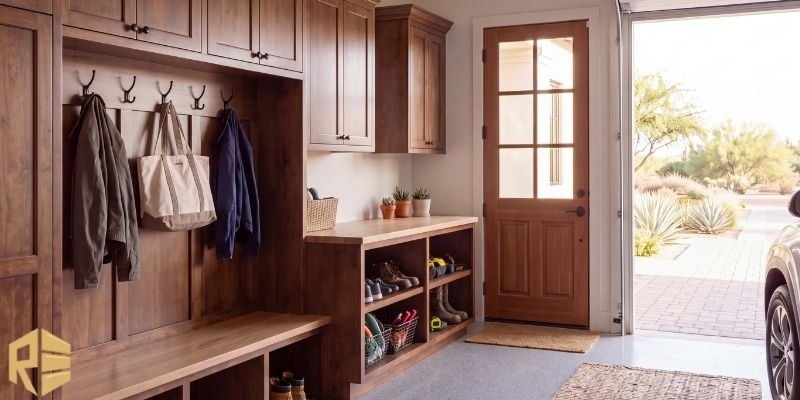
Shoes are one of the biggest sources of mudroom clutter. Leaving them on the floor can quickly reduce usable walking space and make the room appear untidy. Cabinet designers can create shoe storage according to the types and number of shoes used by the household. Open shelves can work well for everyday footwear because they provide quick access. Closed compartments may be better for keeping less frequently used shoes hidden.
The height of each storage section also matters. Lower compartments are convenient for children, while taller sections can accommodate boots or larger footwear. For households with several people, assigning each family member a specific shelf or compartment can make organization even easier.
Add a Comfortable Bench With Hidden Storage
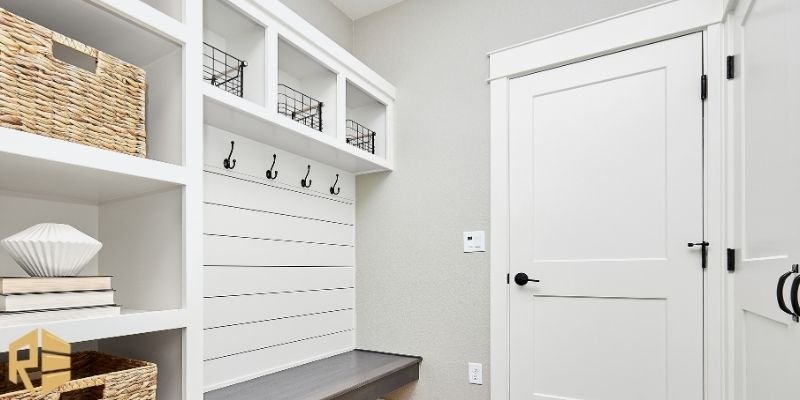
A built-in bench can make a mudroom more functional because it provides a convenient place to sit while putting on or removing shoes. The area beneath the bench can also become valuable storage. Drawers, lift-up compartments, or open cubbies can be incorporated into the design depending on accessibility requirements.
A bench can also visually connect different elements of the mudroom. For example, a continuous cabinet wall can combine upper storage, coat hooks, a seating area, and lower shoe compartments into one integrated design. When planning the bench, consider its height, depth, available walking space, and proximity to the entrance.
Combine Open Cubbies With Closed Cabinets
An effective mudroom does not have to choose between completely open storage and completely closed cabinetry. Combining both can provide better functionality. Open cubbies are ideal for items that are used every day. Children can quickly place backpacks or jackets into assigned compartments without opening doors.
Closed cabinets are better for items that create visual clutter or are only needed occasionally. Seasonal coats, cleaning supplies, extra shoes, and household equipment can be kept behind doors. This combination creates a practical balance: everyday belongings remain accessible, while the overall room can still look clean and organized.
Take Advantage of Vertical Wall Space
Mudrooms often have limited floor area, making vertical storage especially valuable. Instead of extending cabinets outward and reducing walking space, designers can use more of the wall height. Tall cabinetry can provide separate areas for coats, boots, bags, seasonal clothing, and household supplies. Upper cabinets can store items that are not needed every day, while lower sections remain accessible. This is particularly useful in smaller entry areas where every inch matters. Before designing tall cabinets, however, consider ceiling height, doors, windows, vents, lighting, and other architectural features. A custom design can account for these details instead of leaving awkward gaps.
Design Storage Around the Number of Household Members
A mudroom for one or two people will have very different requirements from one used by a large family. For multiple users, individual storage zones can make the space easier to manage. Each person can have a dedicated cubby, hooks, drawer, or cabinet section.
Children may benefit from lower hooks and accessible shelves, while adults may need taller hanging areas and larger compartments. This personalized approach is one of the strongest advantages of Custom Mudroom Cabinets. The cabinet layout can be developed around actual household routines rather than a generic storage configuration.
Include Drawers for Small Everyday Items
Large cabinets are useful for bulky belongings, but small items often need a different type of storage.
Drawers can be used for:
- Keys and wallets
- Sunglasses
- Gloves and scarves
- Pet accessories
- Hats
- Small umbrellas
- Reusable shopping bags
- Household accessories
Using different drawer sizes can prevent small items from becoming mixed together. Soft-close hardware can also improve everyday usability by providing smoother and quieter operation. The location of drawers should be based on frequency of use. Items used every day should remain within easy reach.
Choose Durable Materials for a High-Traffic Area
A mudroom experiences frequent use, so cabinetry needs to withstand repeated opening, closing, touching, and exposure to dirt or moisture. Material selection should consider both durability and maintenance. Easy-to-clean finishes can be especially useful near exterior entrances where dust, rain, and mud may enter the home.
Hardware is equally important. Hinges, drawer slides, hooks, and handles should be selected for regular use rather than purely for appearance. The goal is to create cabinetry that remains practical after years of everyday use, not simply cabinetry that looks attractive when first installed.
Plan a Mudroom Layout That Supports Daily Movement
Storage should never make the entrance harder to use. Cabinet depth, bench placement, door swings, and walking clearance all need to be considered together. Before finalizing the design, identify the natural movement pattern through the room. Think about where people enter, where they remove shoes, where coats are hung, and where bags are placed.
Avoid placing deep storage in areas where it narrows the main walkway. Similarly, cabinet doors and drawers should be able to open without blocking another storage area or entrance. For homeowners considering San Diego cabinet remodeling, these planning details can be especially important when an existing space is being converted into a more functional entry or storage area.
Add Storage for Seasonal and Less Frequently Used Items
Not everything in a mudroom needs to remain visible or immediately accessible. Upper cabinets and tall enclosed units can provide storage for seasonal belongings such as winter coats, extra footwear, sports equipment, blankets, or other items that are used occasionally.
Separating daily storage from seasonal storage prevents the mudroom from becoming overcrowded. It also means that frequently used belongings can remain within easy reach while less important items stay organized behind closed doors.
A good design should therefore consider not only what needs to be stored today, but also how the storage will work throughout the year.
Consider Customization for Unusual Mudroom Spaces
Not every mudroom has a simple rectangular layout. Some spaces may include narrow walls, corners, windows, doors, stairs, or changes in ceiling height. Standard cabinets can leave unused areas around these features. Custom cabinetry can instead be designed around the room’s actual dimensions.
Homeowners researching Custom cabinets in san marcos may find this approach particularly useful when the available space has unusual dimensions or when they want storage that integrates with the home’s existing architecture. The design can incorporate narrow pull-outs, corner cabinets, full-height storage, floating shelves, or other solutions where standard furniture would not fit effectively.
How to Choose the Right Combination of Mudroom Storage
There is no single cabinet configuration that works for every household. The best design depends on the number of users, available space, types of belongings, and daily routine.
| Mudroom Storage Feature | Best Use | Main Advantage |
|---|---|---|
| Open cubbies | Backpacks, shoes, daily items | Quick access |
| Tall cabinets | Coats and seasonal items | Maximizes vertical storage |
| Lower drawers | Shoes and accessories | Easy organization |
| Built-in bench | Sitting and shoe changing | Adds comfort and storage |
| Wall hooks | Coats, bags, hats | Convenient everyday access |
| Upper cabinets | Seasonal belongings | Keeps less-used items hidden |
| Adjustable shelves | Bags and household items | Flexible storage |
| Pull-out storage | Narrow spaces | Uses difficult areas efficiently |
The ideal mudroom usually combines several of these features rather than relying on one storage type.
Work With a Cabinet Professional to Build Around Your Space
A successful mudroom design requires more than choosing attractive cabinet doors. Measurements, storage requirements, materials, hardware, installation, and the home’s existing design should all work together.
When comparing cabinet providers, look at their experience with custom storage, built-ins, material quality, design services, and installation. The Best cabinet makers in San Diego should be able to evaluate the space and translate everyday storage needs into a practical cabinet layout rather than simply offering standard cabinet units. Reza Custom Cabinet & Vanity focuses on custom cabinetry and woodwork designed around individual spaces and storage requirements, including built-in storage solutions beyond the kitchen.
Common Mistakes to Avoid When Designing Mudroom Cabinets
Even a well-planned mudroom can become difficult to use if storage is designed without considering everyday behavior.
Avoid these common mistakes:
- Creating only closed storage: Completely enclosed cabinets can make frequently used items less accessible.
- Ignoring shoe storage: Shoes quickly occupy floor space if no dedicated solution is provided.
- Using too much cabinet depth: Oversized cabinets can reduce comfortable walking space.
- Forgetting children: High hooks and shelves may be difficult for younger family members to use.
- Leaving vertical space unused: Upper walls can provide valuable seasonal storage.
- Choosing materials based only on appearance: High-traffic areas need durable and easy-to-maintain finishes.
- Skipping individual storage zones: Shared storage can become disorganized in larger households.
A good mudroom design should solve these practical problems before focusing on decorative details.
Conclusion
A well-designed mudroom can turn one of the busiest areas of a home into an organized and efficient space. Custom Mudroom Cabinets make it possible to create dedicated storage for shoes, coats, bags, accessories, and seasonal belongings while using the available space more effectively.
The most successful designs combine open cubbies, closed cabinets, drawers, hooks, shelving, and seating according to the household’s daily routine. Vertical storage, durable materials, accessible compartments, and thoughtful cabinet dimensions can further improve functionality.
Rather than adding standard furniture and trying to make it fit, custom cabinetry allows the storage system to be designed around the room itself. With careful planning, a mudroom can provide much more than a place to leave coats and shoes—it can become a practical, organized part of the home’s overall design.
Frequently Asked Questions
- What are the benefits of Custom Mudroom Cabinets?
Custom cabinetry can be designed around the room’s exact dimensions and the household’s storage needs. It can combine shoe storage, coat hanging, drawers, cubbies, shelving, and seating into one coordinated system.
- What should I store in mudroom cabinets?
Mudroom cabinets can store coats, shoes, backpacks, bags, hats, gloves, umbrellas, pet supplies, seasonal clothing, and other everyday items. Less frequently used belongings can be placed in upper or enclosed cabinets.
- Are built-in benches useful in a mudroom?
Yes. A built-in bench provides a comfortable place to sit while putting on shoes and can include drawers, cubbies, or concealed storage underneath.